
5 reasons why you should integrate your ERP with a PPM software
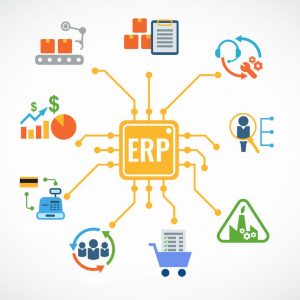
ERPs (Enterprise Resource Planning systems) are the widest and most complex category of business software. Because they are dedicated to managing all kinds of resources, they need to coexist with more specialized business solutions, such as PPM (Project Portfolio Management) systems. In this article, we share the rules of engagement between both tools and the tips for a successful integration.
At ITM Platform we still receive integration requests from clients whose ERPs are at the heart of their finance and operations stack. In the example that follows, we explain how a PPM system and an ERP can coexist productively.
Why ERP and PPM should coexist: a common story
A large ticketing agency hires a business controller to carry out an evaluation of the company’s internal processes. The mission is to suggest improvements oriented to solving data discrepancies between the finance department and the commercial divisions. These matters carry political weight because they affect sensitive issues such as the year-end bonus calculation.
From the first moment, the expert suspects that the problem lies within the business software the company is using, or more precisely, in the lack of coordination between the different management tools adopted in each area of the company, in an organization where a clear CIO role does not exist.
An ERP with duplicated information is a bad ERP
Our business controller discovers that no one has bothered to define the information flows between the ERP (a heavily customized version of SAP) and the company’s project portfolio management system. The consequence is a set of parallel processes with divergent results whose origin is difficult to trace. The ERP simply does not capture the complexity of a project’s cost structure, where cost estimates, real invoices, calculated costs of internal and external hours, reported and approved hours all coexist.
From that moment on, a decision is taken: the PPM system, oriented to business generation, should be the entry point for all the information related to the organization’s projects, so that the PPM’s project financial data rules over the ERP and disagreements can be eliminated.
This example is typical of any ERP and project management software integration. Generally, it is advisable to give the PPM system enough autonomy to support the operational solvency of the projects.
5 keys to a successful ERP integration with a PPM system
Even though every company will have different use cases and specific needs, there are a few clear recommendations for a successful integration of an ERP with a PPM system.
- Let each system do its job. Data integration must be limited to what is strictly operational. It is not advisable to design an integration that ends up generating even greater complexity. Aim for three basic goals: avoid duplicated work, avoid data divergence, and promote transparency.
- Share only the necessary information. In a corporate environment there cannot be black boxes, but be careful about the volume of information you share. When transparency is perfect, the informative noise can be very loud, with a very high productivity cost. That is why it is often advised to send the ERP only the project data strictly required for administrative and financial control tasks.
- Choose a flexible PPM. Many PPM systems only send aggregated information about project costs, which makes it hard to allocate those costs to specific items. ITM Platform, by contrast, can send information with the granularity you need thanks to its open REST API and to standard and custom extensions that react to events (a status change, a purchase update) and trigger actions in your ERP, CRM, or any other application.
- Do not slave away your project managers by forcing them to adopt the projects’ module of your ERP. The best way to integrate ERP and PPM is to let the ERP handle administration and the PPM handle the complexity and the flexibility a project demands.
- Encourage collaboration around projects and standardization within the ERP. Beyond data integration, every technological integration must address human and change management. The procedures you design must leave enough operating room for project experts, taking advantage of the communication and team collaboration features of the PPM. The ERP, on the other hand, usually enforces stricter, standardized, and mandatory procedures.
What sections of a project are covered by the ERP?
When you map the information systems and the data flows that support a business environment, it is essential to know in advance which areas are connected and where the platforms may overlap.
There are four points where the ERP’s administrative control layer touches projects:
- Costs
- Human resources and payroll
- Suppliers management
- CRM
In all of these areas it is crucial to design automatic flows from the portfolio management system to the ERP, defining in each case the granularity required and avoiding invalid data, such as the estimated cost of a task being booked as an actual figure. In ITM Platform, purchase management keeps projected and actual amounts clearly separated, which makes it straightforward to push the right values, and only those values, to the ERP.
What can an ERP not do?
The perception of the ERP as a universal business management machine, suitable for every kind of activity, can be a serious strain on the health of corporate projects.
Here are some areas in which an ERP does not meet the operational standards required by a portfolio management software:
- Resources planning: even though an ERP can calculate and manage resource payments, only a PPM has the flexibility to plan resources and adapt to the delivered work as it is produced.
- Project methodology: PPM tools are designed to be configured to almost any project methodology. In ITM Platform’s case, the functional scope gathers in one place financial and effort data, risk planning and management, business goals, documents, and deliverables.
- Task management and access for team members: the work content is hard to manage from an ERP. Generally, the number of project team members with access to the environment, as well as the collaborative features available, is limited.
- Portfolio view: PPM systems have prebuilt project and portfolio metrics that give a real-time picture of project progress, and they also support customized, exportable reports. Obtaining a similar view from an ERP usually means a tremendous configuration effort and hundreds of consulting hours, while with ITM Platform it takes a few weeks.
Keep on reading:
Benefits of connecting your CRM to your project management tool
Try ITM Platform free for 14 days
Start managing your projects, resources, and portfolios today.