
Project cost management: why does it matter so much?
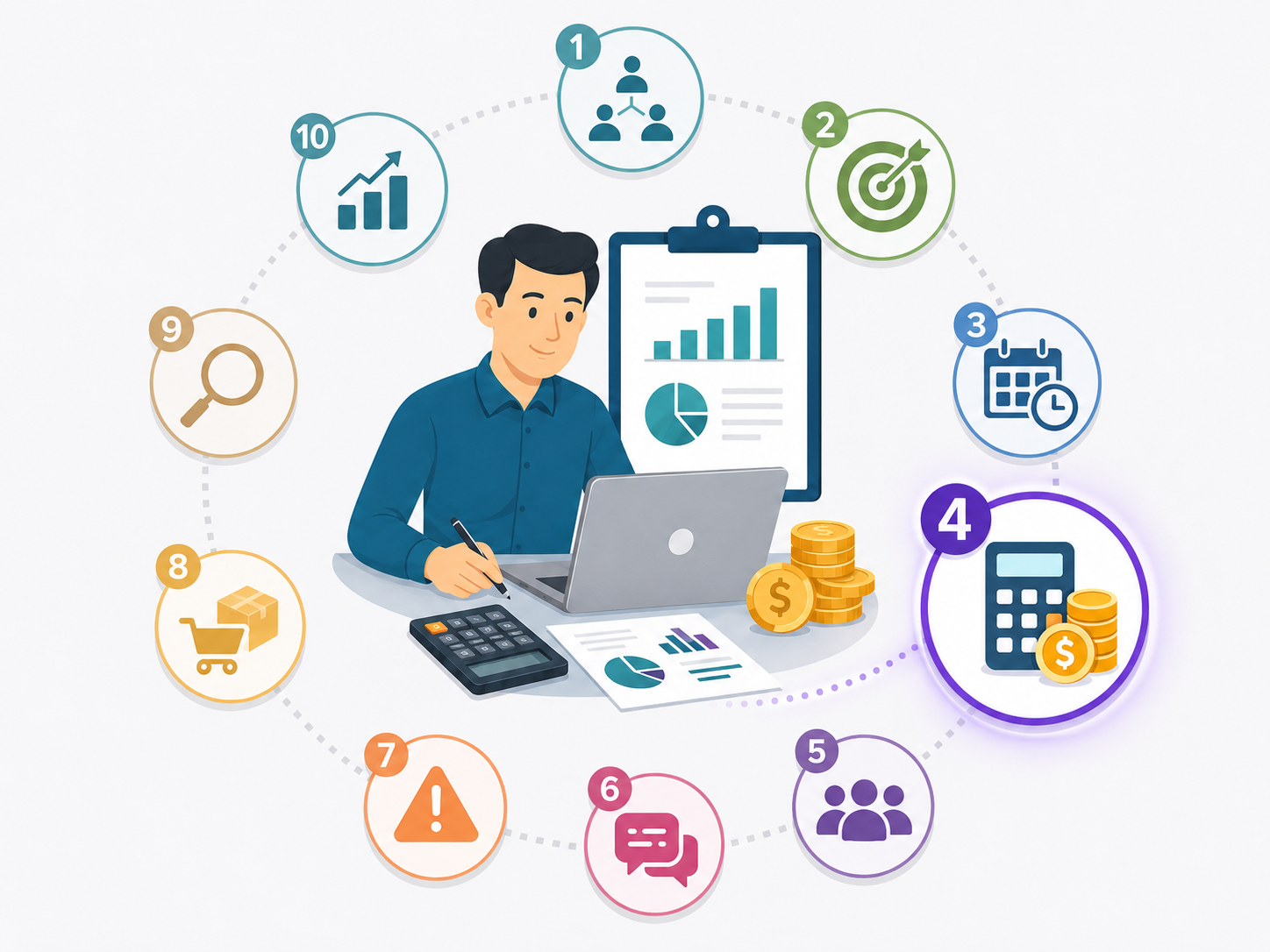
The project shipped on time. The client signed off, the team moved on, and three weeks later somebody in finance works out that it came in 18% over budget. Nobody was hiding anything. The overrun simply happened one approved extra at a time, and there was no moment at which anyone was looking at the total.
That is the everyday failure that cost management exists to prevent.
Project cost management (PCM) is the process of estimating, allocating and controlling the costs of a project, so that the organization knows its spending in advance and reduces the chances of exceeding the initial budget.
It runs across the whole life cycle, from the first plan to final delivery, including every review in between. Following the PMBOK, it is usually broken into four stages.
1. You cannot cost work you have not defined
Before anything can be priced, you need to know which activities the project will actually carry out. Only then can you look for information about the resources each one requires.
The most reliable source is first hand experience: the same process run by your own organization, or by a company you can ask directly. Where that is unavailable, published data from firms that have executed comparable projects will do, as long as you note how comparable it really is.
Skipping this stage is what produces the budget that looks precise and is built on nothing. A number carried over from a project with a different scope is not an estimate, it is a hope.
2. Turning resources into money and time
Once the activities and the resources are known, the job is to convert them into monetary and time units. Which method you use depends on how much information you have.
| Method | How it works | Use it when |
|---|---|---|
| Analogous | Take a recent, similar project and adjust | You have comparable work in the last year or two |
| Analogous with correction | Take an older project and correct for currency movements, raw material revaluation or depreciation | The only comparable project is several years old |
| Parametric | Represent cost mathematically as a function of measurable drivers | You have enough historical data to model the relationship |
| Bottom up | Price each task from the effort it needs and the rate of the profile doing it | The work breakdown is detailed enough to estimate task by task |
Bottom up estimation is the one that scales, and it rests on a rate table:
Estimated cost = estimated hours per professional profile × standard cost rate for that profile
The useful part is that you can estimate by role before you know who will do the work. In ITM Platform this is how the numbers are produced: each professional profile carries a standard cost, and the system multiplies planned hours by the corresponding rate as you allocate them, falling back to a global standard cost when profiles are not yet defined. The setup is described in professional profiles and standard costs.
For the arithmetic behind converting effort into money, see our guide on how to calculate the cost of your projects with man hours.
Estimation is also where risk belongs. A cost estimate that ignores what might go wrong, how badly it would hit the project and how often it tends to happen, is an estimate of the best case only.
3. The budget is the baseline you will be judged against
The budget adds the estimated costs from the previous stage to the estimated schedule, so it shows the total economic and time picture of the project rather than a single lump sum.
An estimate is far more useful when it is broken down into headings for each specific task or activity, with the period in which each one is expected to be spent. That breakdown is what lets you tell a genuine overrun from spending that is simply early.
The output of this stage is the reference line, the baseline, against which every control measure described below will be compared. Draw it badly and everything downstream measures the wrong thing.
4. Control is comparing today’s cost against the line you drew
Cost control starts the moment the project does. Daily, weekly or at whatever checkpoints you have set, you measure current cost and compare it against the baseline.
Deviation = actual cost − planned cost at the same date
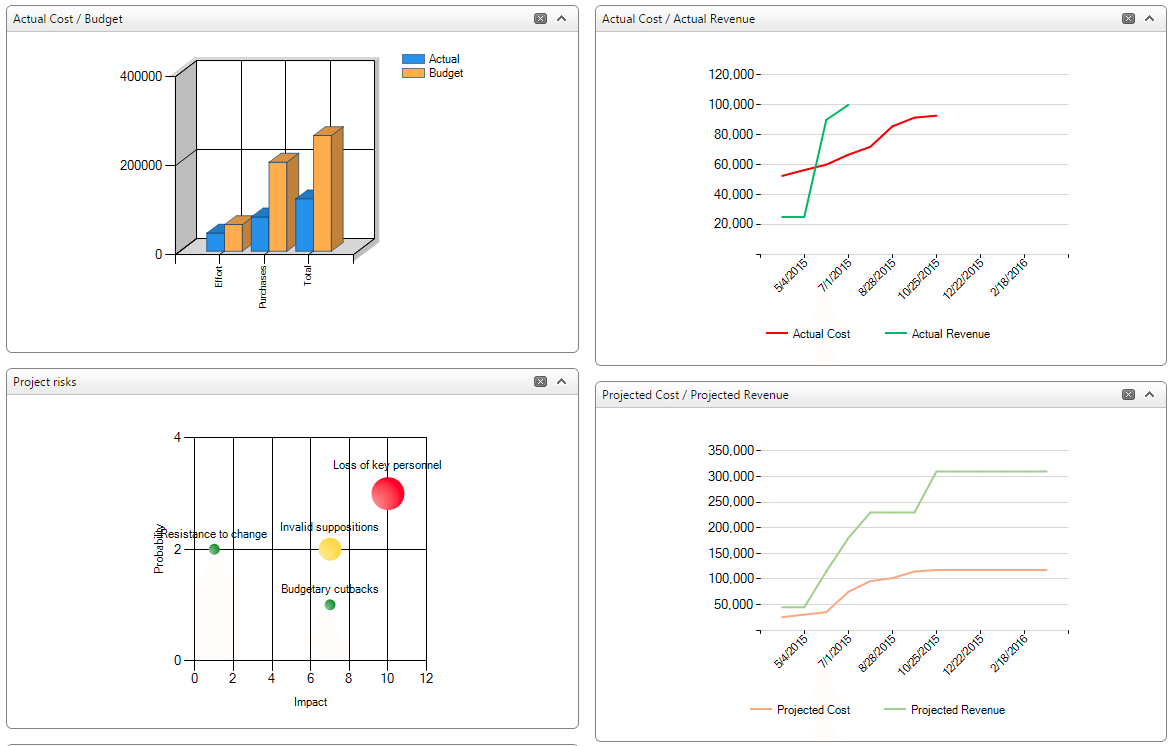
Because monitoring is continuous, deviations from the baseline surface early, which is the whole point: an early deviation can still be corrected. A late one can only be explained.
The comparison is easier to sustain when the figures live in one place instead of three spreadsheets. A project’s Budget tab in ITM Platform shows four blocks side by side: the top-down budget, the funding ceiling the organization assigned; the bottom-up estimate calculated from planned tasks and resource allocations; actual values, updated in real time from time entries and invoices; and closed values from the last project close. The project budget documentation covers baselines and the difference to achieve top-down indicator.
The same estimated against actual comparison applies to progress, and the two drift together. Our article on the difference between estimated and actual percentages explains why reported progress deserves the same scrutiny as reported cost.
Hours are only half the cost
Most cost management advice quietly assumes that a project’s cost is its labor. It is not. Licenses, subcontractors, materials and travel are committed weeks before they are invoiced, and that gap is where budgets are lost: the money is spent, the invoice has not arrived, and the actual cost still looks healthy.
Modelling external spend the same way you model effort closes the gap. Group purchases into budget accounts, give each purchase a projected amount when it is committed and an actual amount when it is confirmed, and decide which purchase statuses count as a real cost. In ITM Platform, only purchases in a status flagged as an actual value roll into the project’s actual cost, so a commitment stays visible as a projection until it is confirmed. Purchases can also be linked to a task, so their due dates follow the schedule. See purchase management for the mechanics.
What good cost management actually buys you
Not a prettier report. It buys you the ability to answer, at any point in the project, two questions that are otherwise guesswork: what will this cost by the time it finishes, and is that still acceptable? Everything above exists to make those two answers available while there is still time to act on them.
Next steps
- Start a free ITM Platform trial and set a top-down budget on a real project to see how the bottom-up estimate moves against it.
- See how costs and revenue work together across a portfolio.
- Set up your rate table first: professional profiles and standard costs is where every estimate starts.
Try ITM Platform free for 14 days
Start managing your projects, resources, and portfolios today.