four team members

Onyriq’s founding team

Onyriq represents a new generation of innovative companies pursuing the social impact of knowledge.

Ainhoa, Joseba and Mikel met at the University of the Basque Country (UPV-EHU) in San Sebastian while studying chemistry and specializing in polymers. Years later, the three have finished their postgraduate studies and greet each morning in the Parc Científic de Barcelona. Although they research together every day and haven’t lost sight of the laboratories, chemical structures or trials, they don’t teach nor receive a salary from the university.

These three chemists have started up their own company together with Oriol, an aerospace engineer based in Japan: a year ago, in September 2016, Onyriq was founded as a startup whose core business lies in the research, development and innovation of polymers. With a business model that is clearly focused on knowledge transfer, their objective is ambitious: to support the company with the commercial exploitation of its own research through licenses and patents.

Join Onyriq and start managing and evaluating your programs with ITM Platform

The day to day operations of Onyriq include the management of its research projects with ITM Platform. "We work with ITM Platform for both the execution of our projects and the development of proposals to clients, Since we calculate the differences between the proposal and the actual project (in budget, time and activities), that allows us to better know its profitability."

"Onyriq's example is representative of an increasing number of high value-added companies that are using portfolio and program management tools previously exclusive of large corporations"

In a market as broad as that of polymeric materials, Onyriq transfers technologies used across a range of industries, such as: aerospace, health, 3D printing or food. Their previous experience has led them to define three main lines of research: the synthesis and modification of polymers and biopolymers, the encapsulation of active compounds for pharmaceutical companies, and the functionalization of materials to impart specific properties. "We hope that companies with different core businesses that work with polymers can outsource the innovation of their processes by relying on us and our extensive know-how," says Ainhoa.

logo Onyriq

As for their service portfolio, Onyriq is divided into three corners: the transfer of knowledge with its own research, innovation on demand and training workshops. Although the marketing of own research currently has a secondary importance, the goal is to become the main source of income for the company. To reach this stage, Onyriq not only needs to manage its projects with professionalism, but also to continuously evaluate the different lines of research that group the different projects of the company.

The example of Onyriq shows how more and more high value-added companies need access to portfolio and program management tools that were previously only available to large multinational groups, but to which they have better access thanks to the appearance of actors who are betting on the democratization of the sector, like ITM Platform.

team mebers talking, computer

Program management, model requirement

Despite their youth, the Onyriq founders have already run European research projects with multi-million budgets. While managing a major project is not a major concern, researching without losing sight of profitability is indeed a novel challenge, and one that is hard to combine with the long-term vision required by academic research.

Program Management bundles the entrepreneurial and the scientific mindset. Given their previous experience as project managers, it was known from the start that a central piece towards sustainability was a tool that fulfilled two objectives: to allow the team to adopt professional project management methodologies, and to group similar projects with common objectives into programs.

"Program Management bundles the entrepreneurial and the scientific mindset."

It was then, after what Ainhoa ​​describes as an exhaustive process of searching and evaluating different options, they finally opted for ITM Platform. According to her account, "ITM Platform is by far the most complete solution we could find. And we tried many."

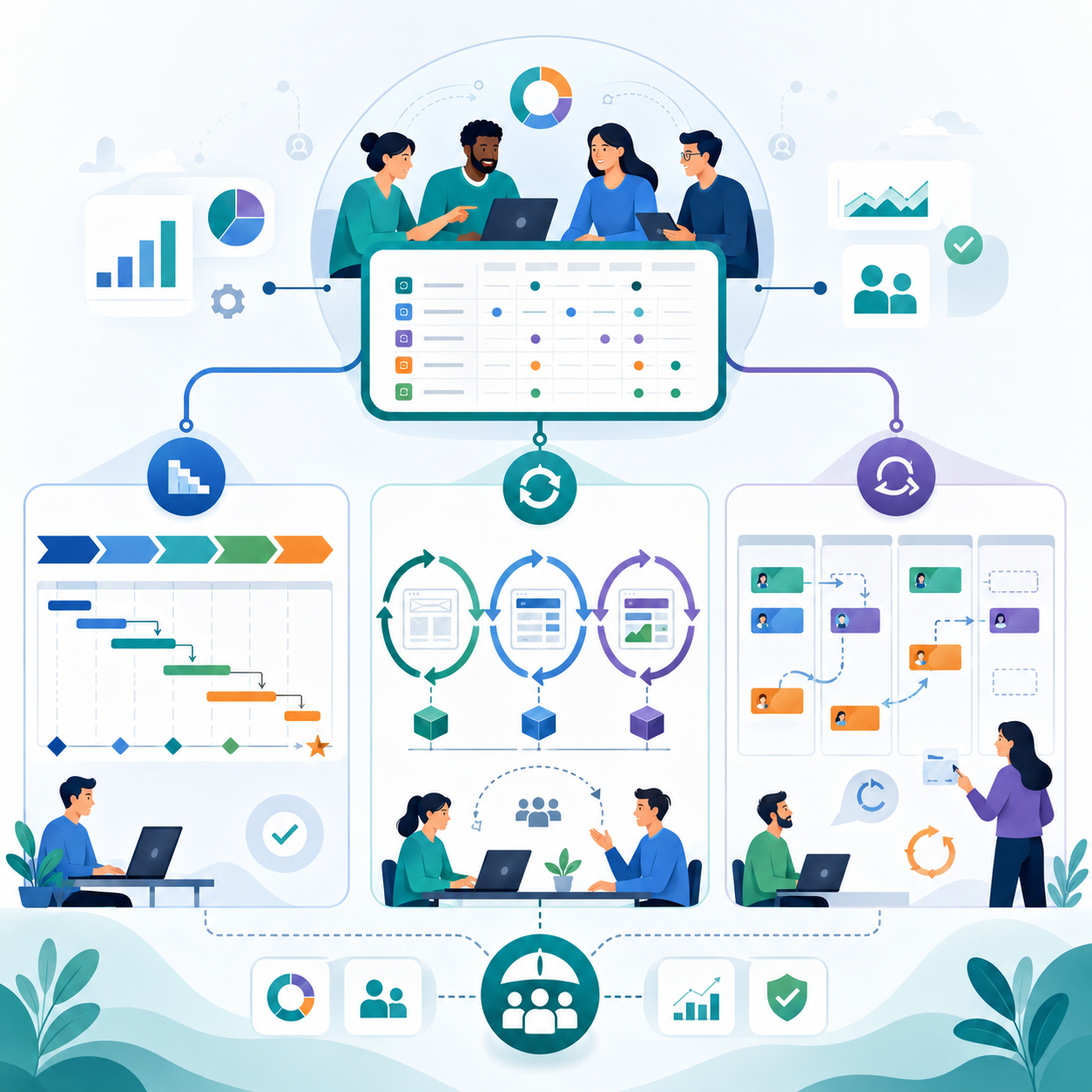
In addition to the unified management of the research lines as project programs, some of the benefits that favored the decision were the purchase and revenue management, with which Onyriq manages the benefits generated by the different accounts and associated suppliers, and the freedom to create both predictive projects and agile projects. If Gantt diagrams are perfect for preparing projects for customers, Kanban panels are widely used for more informal proposals and projects in which maximum visibility is desired for all members, so that coordinated progress can be made.

The fact that ITM Platform is not overly technical and allows the use of non-certified project managers has also been a very important factor in ensuring the continued use of the tool. Another important feature is flexibility: "we have been able to configure the tool to adapt it to our internal operating model".

"ITM Platform is by far the most complete solution we could find. And we tried many."

Balancing demand

As in any startup, over the next few years Onyriq will be dedicated to checking which business scenarios are correct and which need adjustment. Onyriq's B2B services are so closely related to the core business of customers that the future of the business will depend heavily on the relationships that consolidate in this initial stage. Although polymer applications are very broad, and many of them have an appealing niche potential, the Onyriq team is aware that the market will judge each line of research. According to Ainhoa, "the importance of the different axes of our activity will ultimately be proportional to the demand that we find. In a possible world, within five years we could patent a successful synthesis method for 3D printing of prostheses. Although we could get to specialize in the health sector, we know that diversification will key so we’re not dependent on the economic cycles. R&D is so unpredictable that we must be prepared by measuring how things are moving forward."

That need for measurement lies at the heart of Onyriq's internal processes, which ITM Platform uses to meet its two major business goals today: financial independence and continuous change.

Financial Independence

Currently, contract research for companies outsourcing innovation accounts for approximately two-thirds of Onyriq's revenues, which are used to fund own research. So much so, that Onyriq's main goal for the next few years is to market its own research to become the first source of income. When that time comes, Onyriq will become more selective with on demand services. This will be the moment when the long terms of research will be better supported by the rest of the structure.

Continuous Change

Some knowledge transfer might not be good for business due to both technological risks and market trends. As in any innovative portfolio, it’s important thing to combine projects with different expectations of profitability and risk levels so that more conservative projects support the most creative proposals.

"In such a changing and unpredictable environment as R & D, it is essential to be prepared and to measure how things are working at all times."

Onyriq's business processes require continuous measurement of different key performance indicators (KPIs) in order to calculate ROI and decide on which project should be part of the portfolio.

While all startups are expected to pivot and search for their model, for Onyriq that pivotal effort extends after breaking even. Knowing what research programs and which technologies are in greater demand or which sectors are more profitable will remain necessary for Onyriq to maintain the competitive advantage in an innovative market dominated by big players.

This business foundation gives Onyriq the strength to fight against the limitations of the most advanced scientific research. As Ainhoa ​​acknowledges: "Although technological centers and universities are committed to the generation of knowledge, this R & D is often not applied. The aim of ONYRIQ is to turn the potential of polymer science into innovative technologies or products with a positive impact on society and, in turn, enable profitable business models. To do this, we adapt our knowledge to the real capabilities of the industry and to the market situation. "

Receive the latest blogs directly into your inbox


project manager showing a report to his team, graphs and diagramsIn the set of good practices in the Project Management Book of Knowledge (PMBOK), the sixth area of ​​knowledge refers to human resources management within a project.

It is fundamental to perform human resource management of the organization to the highest standard. Good management will allow you to create high performance teams in each phase of the project. In this way, the maximum productivity of any company will be achieved: the efficiency of the available resources to achieve the proposed objectives.

In the field of projects, teams are created over a given period to collaborate intensively in the production of given objective. Due to the brevity of project teams, it is fundamental to master the processes to be able to manage resources, according to the following obligations:

  • Correctly estimate the amount of human resources needed, based on task estimates
  • Selecting staff with the right skills
  • Plan the costs derived from the allocation of these resources
  • Ensure that resources have sufficient time to devote to the project
  • Control the time deviations to avoid any delays that can lead to non-expendable costs

Plan the allocation of your resources to all your projects with ITM Platform

Next, we review the steps for project resource planning.

1. Estimating resources

In estimating your resources, firstly a forecast of internal and external resources is made that will be needed for the management of the project. It is necessary to contemplate the active estimation for each task, activity and phase of development, so that the deployment is carried out efficiently.

Among the most common techniques for estimating resources is the consultation of experts, that is, based on the experience that has been acquired in previous projects. Data and results achieved in the past will help improve the accuracy of the current project.

2. Data collection

It is this phase in which the available resources for subsequent management are detailed, and usually includes information regarding:

  • Available resources.
  • Resource demand.
  • In what way the available resources will be able to satisfy the demand raised.

3. Resource Plan

In project management, a plan should be prepared that addresses the different aspects, from the needs of the demand, the assignment of roles and responsibilities, and the desired results.

As head of the project you can create a list sorted by hierarchies in which the resources necessary for the execution and management of the project are displayed so as to be able to divide, delegate and assign responsibilities and functions.

Learn how to plan your resources here with ITM Platform

4. Development planning

All the information gathered in the initial phase will lay the foundations for further development planning. In this phase a schedule is created which indicates the establishment of the starting point and completion of all tasks, activities or works that will be developed in the project. This will create a final schedule, which will also include time management, which happens to be the third area of ​​knowledge of the PMBOK referred to in the Guide.

The resource plan prepared before the development phase provides information on the hierarchical breakdown of the available resources, which are related or matched with the list of resources necessary for the development of the project. This exercise improves the efficiency in resource allocation that is needed for each activity.

5. Resource verification

The project manager is responsible for the project, so make sure that the assignments made allow the creation of high-performance teams capable of executing each phase of the plan correctly and efficiently. Taking into account remote workers, which is a typical occurence today.

In managing the human resources of a project, talent management is essential. Experience is a plus, and it is important to know the skills, competencies and abilities of all team members in the work group, which will improve the assignment of roles and responsibilities while achieving greater commitment and involvement.

In addition, as the project manager, director or coordinator, you must seek the balance between functionality and profitability. The allocation phase is fundamental, since if more resources are allocated than necessary, to a certain task or activity, it could implicate the financial resources of the company.

6. Negotiation of resources

Typically, companies use internal human resources to carry out smaller plans. At this point, the project manager must be able to negotiate if he wants to incorporate external resources into the project, for example in the case of a project where high specialization is required and the company has a more profitable to contract in place to create a team.

In any case, it is becoming more common for corporate human resources teams to focus on identifying talent within the same organization to improve the profitability of the activity and each new venture.

The management of project resources at a portfolio level

Project teams can never be managed in isolation, because members often spend their time among various projects. Therefore, it is imperative that someone in the organization has a centralized view on the use of all resources. In the case of conflicts, there must be criteria for deciding which project is allocated critical resources, so that the most important projects suffer the least delays possible.

Often, portfolio planning tools are used by a professional figure with greater authority than project managers, such as a PMO director, a project program director, or the portfolio director.

This article belongs to a series on the 10 areas of knowledge of PMBOK. Take a look at the articles already published:

The 10 areas of knowledge. 1: Project integration management

Integration with the ITM Platform Project Menu

The 10 areas of knowledge. 2: Project scope management

The 10 areas of knowledge. 3: Project Time Management

The 10 areas of knowledge. 4: Project Cost Management

Managing Project Quality: Insurance case study

Receive the latest blogs directly into your inbox


collection of colorful vector icons in modern flat design style on education and learning theme isolated on white backgroundSubject matter experts are highly sought after by project managers and project teams to provide unique expertise for solving a problem or meeting a technology challenge.

They often act as key advisers because of their deep understanding of a certain topic. This may be an area of knowledge, a process, a system, software or a piece of equipment. The unique perspective of a subject matter expert can inform content within the project, or the execution of the project itself.

The subject matter expert balancing act

A project’s subject matter expert will have spent a lot of time developing their specialisation. Either they’ve worked in a role that has allowed them to gain understanding of the system or topic, or they’ve studied extensively in the area. Inside your company this might be software specialists, technicians or engineers. Outside your company this might be lawyers, accountants or local government representatives.

Integrate your Subject Matter Experts with your ITM Platform environment

So what value does a subject matter expert provide?

Their input can often change the scope and direction of a project. They may have an understanding of systems or processes that will alter the approach the team is taking, or they may be able to provide an understanding around limitations of a piece of equipment. Without the specialised knowledge and expertise of the subject matter expert, it could be difficult to know what you are working with.

Where could this be a risk?

It’s important to be aware that your subject matter expert has invested a lot of time working in their speciality area. Whether they are aware of it or not, they have probably formed some strong opinions on it.

For example, a subject matter expert may have specialist knowledge about a certain system your company uses. However, they may be unsure of how this system interacts with newer software, apps or social media sites, and how they can be utilised together to improve the customer experience.

Similarly, while a subject matter expert may know a lot about a specific product, they could be unfamiliar with your audience itself. This would make it difficult for them to understand how the product will be used by this customer demographic.

The takeaway message from this is that if you’re working with a subject matter expert, consider how their potential bias weighs up against the value of the knowledge they’re providing. It’s a balancing act. Don’t take everything they say as the whole truth, but remember that they have unique insights to offer, which can contribute to your project.

Strategies for dealing with potential subject matter expert bias

Here are a few things to keep in mind if you’re working with a subject matter expert:

1. Stay aware of potential biases

Keep in mind that while you’re dealing with an expert, their particular views on the subject matter may not take into account the relative position of this knowledge in your project. Their research and knowledge should complement that of other experts on the team.

Any bias could also result in the objective of your project being skewed. Don’t allow this to override the purpose and outcome of the project.

2. Have research proofed before it is implemented

While it’s tempting to have subject matter experts heavily involved in the entirety of a project due to their superior knowledge and expertise, it’s a good idea to leave them out of the implementation process if possible. This allows someone else to look over their research and identify any potential bias before it is implemented for the project.

3. Have a number of subject matter experts working together

Another good idea is to engage several subject matter experts to work on the project together. It’s even better if they come from completely different backgrounds, as they will have different opinions. This will mean that several people’s input comes together to produce the final product and the opportunity for individual bias is lessened.

While it may not be possible (or affordable) to find two or three subject matter experts, at least have your expert work closely with other members in the team who can apply their own knowledge and perspective to the project.

Managing subject matter experts and stakeholders is a big part of what a project manager does day-to-day: oftentimes, the most crucial aspects of projects are related to leadership, communication and engagement problems.

One of the best ways you can learn more about how to work with subject matter experts is by completing a project management course online. Southern Cross University offers an online Master of Project Management course, designed to develop your critical thinking and leadership skills.

This article was produced by Southern Cross University in collaboration with ITM Platform.

Receive the latest blogs directly into your inbox


think ideas conceptual design. light, tools, men, computer, experiences, clock, dollar, book, rocketManaging a portfolio of innovative projects incurs many difficulties, such as the establishment of a culture of continuous evaluation in order to validate the hypothesis, or the difficult collaboration of multidisciplinary teams with no prior experience to rely on. For those who lead the innovation strategy, the biggest challenge is to have a tool that allows distinguishing the relative importance of each project in order to prioritize its implementation.

As the ratio between innovative ideas and projects reaching the final stage is very low, it is especially important to ensure that the highest value projects are approved. It is worth noting: innovation projects are very inefficient. It is necessary to spend time and money on research until you get an idea that is really worth pursuing. But that does not mean that you do not have to control how much time and money you spend, or what activities.

That is why this type of portfolio usually follows a lean philosophy: it starts from a hypothesis or idea that must pass through successive phases of refinement and validation.

Thus, before the existence of a project in the execution phase, there is the proto-project: first the idea or hypothesis, then the MVP, which requires pivot points. When the starting hypothesis is not endorsed by actual experience, or only partially, the proto-project can be reoriented in the light of what has been learned.

As pivoting generates additional costs in the search for commercial and technical viability, innovative proposals must be constantly evaluated to consider which ones should have room to generate inefficiencies and additional costs until a sound foundation is found - and which are discarded so that the investment is sustainable.

Innovation and corporate values

Innovation projects in large corporations are usually characterized by responding to a vision that goes beyond the business, also pointing to values ​​such as Corporate Social Responsibility, environmental sustainability or the consolidation of one's own innovative culture.

For example, BBVA has an ambitious innovation strategy centered on Big Data. As the ultimate goal is to better understand the behavior of customers to provide better services, efforts are directed towards knowledge creation. With important ramifications: the key professional is no longer the traditional financier, but the data scientist, who "dominates statistics, knows how to program and also understands the business". The various initiatives that emerge from BBVA's Big Data strategy struggle for finite (though abundant) resources, which is why Marco Bressan has decided to concentrate on the centralization of information to begin with.

Start prioritizing your portfolio of innovative projects with ITM Platform

On the other hand, the means that any corporation has to materialize an innovation strategy is its portfolio of projects. In order for the portfolio of projects to have sufficient bearing, portfolio management must be the explicit responsibility of a corporate unit, often the management committee itself.

In the case of General Electric (GE), verticals include aviation and transportation, but they extend to materials as diverse as software, health services and water.

A sample of the diversity in GE's innovative portfolio, pictures

A sample of the diversity in GE's innovative portfolio

Unfortunately, as innovative projects are often completely unpublished and very different from each other, it is often difficult to know which projects are to be given preferential treatment. Is it more important that the project produces a social return or contributes to the modernization of the technological infrastructure?

Given the difficulty of comparing two innovative projects and knowing which will bring greater value to the company, it is crucial to have a criteria for making complex choices objectively.

Complex decisions are often subjective

A complex choice is one in which the alternatives are weighted based on more than one quality, so that there is no optimal alternative that surpasses the rest.

For example, several factors are taken into account when choosing an internet service provider: price, quality of customer service, the speed of the line and the reputation of the company. Usually the more economical services offer lower speeds, while more established brands often offer improved after-sales services. The decision is never obvious.

Complex choices are made daily. Often, as is the case with internet providers, the final decision is usually subjective, because whoever decides does not have the necessary time or tools to decide which option gives the maximum value. This hasty dimension of the decision allows competitors to appeal to the consumers' emotions and win with arguments less related to the service itself.

However, it is obvious that whoever leads the innovation program of a corporation can not be carried away with emotion. You will have to give reasons for your decisions, rely on data and get the push and commitment of many teams, who often work in remote locations.

Complex corporate decisions:

Portfolio prioritization with AHP

Without a technique or method to compare between the different value criteria, each choice between projects is difficult, equivalent to the choice between ethical values, such as freedom and equality.

Although there are dozens of prioritization methodologies for product requirements, there are not many alternatives in the world of project management.

The most convenient method for responding to complex choices representing the alternatives between innovative projects is AHP, an acronym for Analytical Hierarchy Process.

In short, AHP is advisable because:

  • It helps build consensus around how to implement the innovative portfolio strategy
  • It is linked by definition to the criteria, values and business objectives
  • Shorten the political discussions
  • Increase the commitment with the decisions taken, since all the criteria of the corporation are represented in the right measure.

This technique allows for comparing, in a table format, the relative importance of each criterion or objective.

Business goals prioritization for "Optimist - 110% sales" Scenario. Table

The resulting table does not hierarchize in absolute terms. That is to say: it does not classify the objectives from more to less important, since that is an oversimplification. On the contrary, it allows us to attend to fundamental nuances when it comes to assessing the diversity of value propositions delivered by innovative projects.

For example, in the case of an innovative portfolio one could compare the importance of the following objectives:

  • Improving innovative culture
  • Increase market share in digital services
  • Modernize the technological infrastructure

Let us now imagine that the management committee of a corporation devotes a meeting to compare these objectives and discuss which is more important for the strategy comparing them in pairs. The conclusion would be something like the following table:

Table, innovative culture, digital services, modernization

Although matrices can be done by hand or in Excel, it is convenient to have software that allows calculation and is integrated with the project management itself, such as ITM Platform.

Thus, not only is there a system that helps to perform the analysis, but its results are registered and connected with the evaluation of the projects themselves.

By linking each project to the objectives and criteria it supports, ITM Platform indicates which projects contribute the most value and should start sooner.

Of course, the work of evaluating the proposals will remain a difficult art, as well as the elaboration of innovative proposals, with all the market prospecting exercises, identification of tendencies and uncertainty for the future.

But there is a basis in the management of the information that must be demandable. The facilitated prioritization that we have explained in this article has the great advantage of generating consensus and supporting informed, renegotiable and easy to communicate decisions.

Receive the latest blogs directly into your inbox


Effectiveness of internal change projects requires effective leadership that is able to be influential without coercion, to persuade through seduction, and to recognize the complexity of influence in corporate settings.

Communication is one of the most complex and at the same time exciting processes of the human being. Although many human aspects are influenced by communication, language is the main component. In addition, in a project-dominated work environment, where the nature of work is different every time, communication is a fundamental piece that every project manager must master.

Communicate with all your team members in a collaborative software and find out the status of your projects at any particular moment

The same is true for projects aimed at internal change. Moreover, change communication is more complex than the normal. Typically, when we communicate a message to produce a change in someone's behaviour, we expect an immediate reaction from an isolated individual or a small group of people. On the contrary, in change management we seek to produce a stable and controlled change, over time, where the recipient is a group of people whose answers must be coordinated. The complexity can be overwhelming.

The importance of communication in these cases is essential. If you do not measure the reactions to the change through feedback flows, you run the risk of unsuccessfully implementing the change due to uncertainty and lack of knowledge of the issues.

Therefore, mastery of communication techniques is essential for the proper functioning of a company. To begin with, in organizations of a certain size it is advisable to have internal communication policies that facilitate such feedback. One simple way to set these policies, for example, is to set up weekly meetings. In large corporations, internal communication often requires the hiring of experts to streamline discussions and establish initiatives to share ideas, knowledge or impressions.

In general, the domain of change communications can be divided into three aspects: using the right language, communicate in the optimal context, and to focus communication to the solution of real problems presented in the projects and which are perceived by their Leaders.

Use the right language to communicate change

The words you use to describe change management will mark the willingness of your interlocutors to adopt these new work systems. Whether it's to convince project leaders about the introduction of a new methodology or to motivate project members to keep it in mind during the different phases of the project, the terminology that you have managed will have clear repercussions.

For starters, its very difficult for your team to feel interested in a work system that they do not understand. Therefore, it is best to speak in a language that you know they will understand. If the new methodology is born from the identification of problems with which they are in contact, make the connections obvious so that they can understand the consequences of their work on the whole organization. Communication can empower if it seeks to reinforce the consistency between problems and solutions to the scale of individual work.

Another more simple example, it happens similarly when a doctor explains to their patient what his diagnosis is and why it is important to follow a certain treatment. If you use excessively technical language, although it is probably the most scientifically and academically correct, your patient will not understand, will not give adequate importance to their illness, or will not be able to properly follow the treatment. Therefore, it is the responsibility of the physician to use adequate language to ensure that the patient is aware of his illness and predisposes him to follow the treatment properly. The success of the company (in this case, the good treatment of the patient) depends on it.

Context

Read this article if you are worried that your computer doesn't have all the information needed: Tips for communication in remote work teams

Change management cannot be considered an isolated activity, independent of the rest of the company. Precisely the opposite, change management must permeate all aspects of the company, so it must be shown as a global concept that relates to the company and its circumstances.

A fact that is common to change in all companies, is that it must occur in each and every one of the people involved in the project. The global change will be the result of the addition and interaction of all the subjects involved in the project or in the company.

Therefore, change must be presented as a discipline that requires regular and progressive training, prior knowledge and interaction between individuals.

Regardless of these facts, the change manager must pay special attention to the needs and specific situation of each company and market, in order to be able to adapt the change methodologies in a personalized way to the circumstances of the company.

Solving real problems

Company managers seek solutions to their daily business problems to enable them to reach a final product that meets the needs of their customers and obtain the desired market share.

Therefore, in order to convince them of the need to make changes and an adequate management of the change process, it is necessary to touch on the issues that matter to them, that the changes aim to improve the results of the projects. For example, if the organization does not have a methodology for coordinating projects with interdependencies, new conversations about the contribution of projects in terms of external benefits, the objectives of the different programs and the guidelines that guide the overall strategy should aim to spread to all levels, to be gradually incorporated as a business culture. Thus, project members should move from being part of a project to being part of a corporate portfolio with more ambitious goals.

One of the main responsibilities of the change manager is to identify how process failures, described at the macro level, can be modified in a realistic manner. It is essential that an arrangement be reached between a top-down and bottom-up perspective. 

Acceptance = language + context + troubleshooting

Today, more than ever, organizations need effective change management. The change today is greater than ever before in business history: faster and more important and more complex. Due to the demands of the market, companies also become more demanding and ask for positive and concrete results.

To get acceptance of the change systems, you can rely on the three fundamental pillars that we have developed throughout this article: use a precise language while also being accessible, adapt to the context and the concrete needs of each company and each market scenario and demonstrate that an efficient change management will solve practical problems for the company.

If you are interested in this article, you can continue reading some of these:

change management concepts and definitions

5 considerations for managing a project portfolio

Receive the latest blogs directly into your inbox